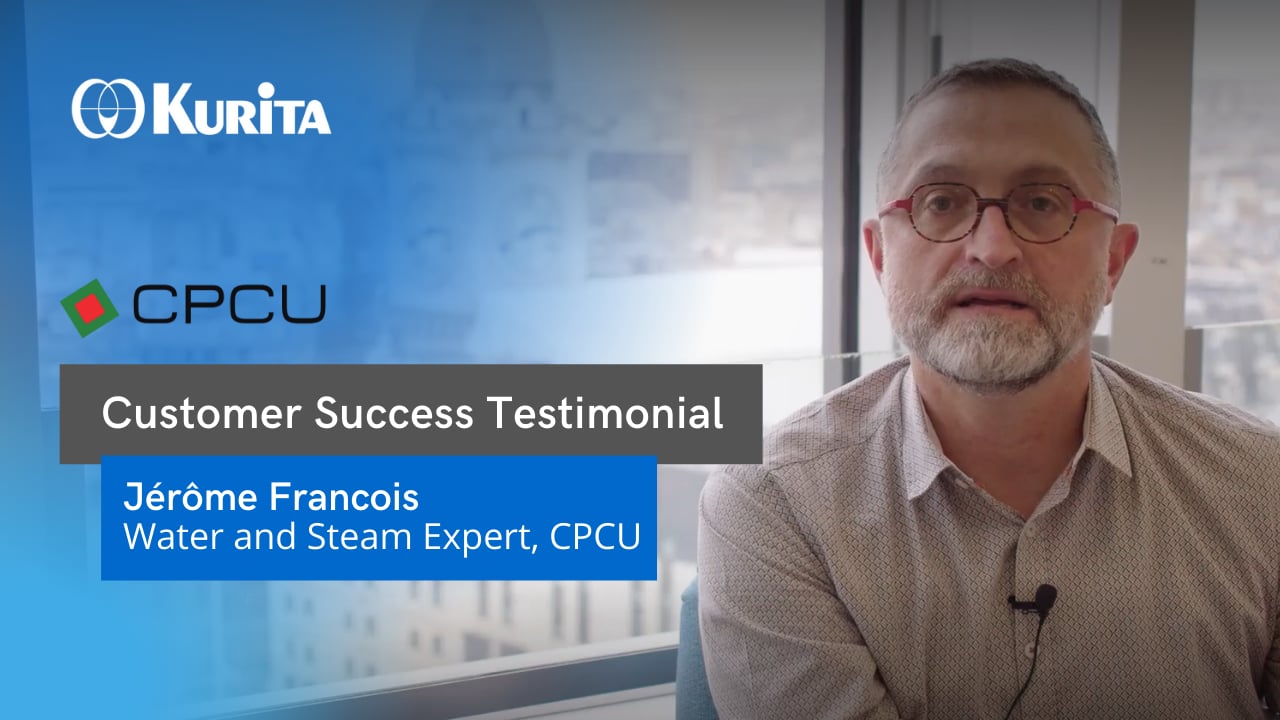
CPCU is applying Kurita’s Cetamine® Technology successfully since 2007 with excellent protection against corrosion. We can confirm:
1) Ideal distribution of active components in the whole network resulting in optimal alkalization.
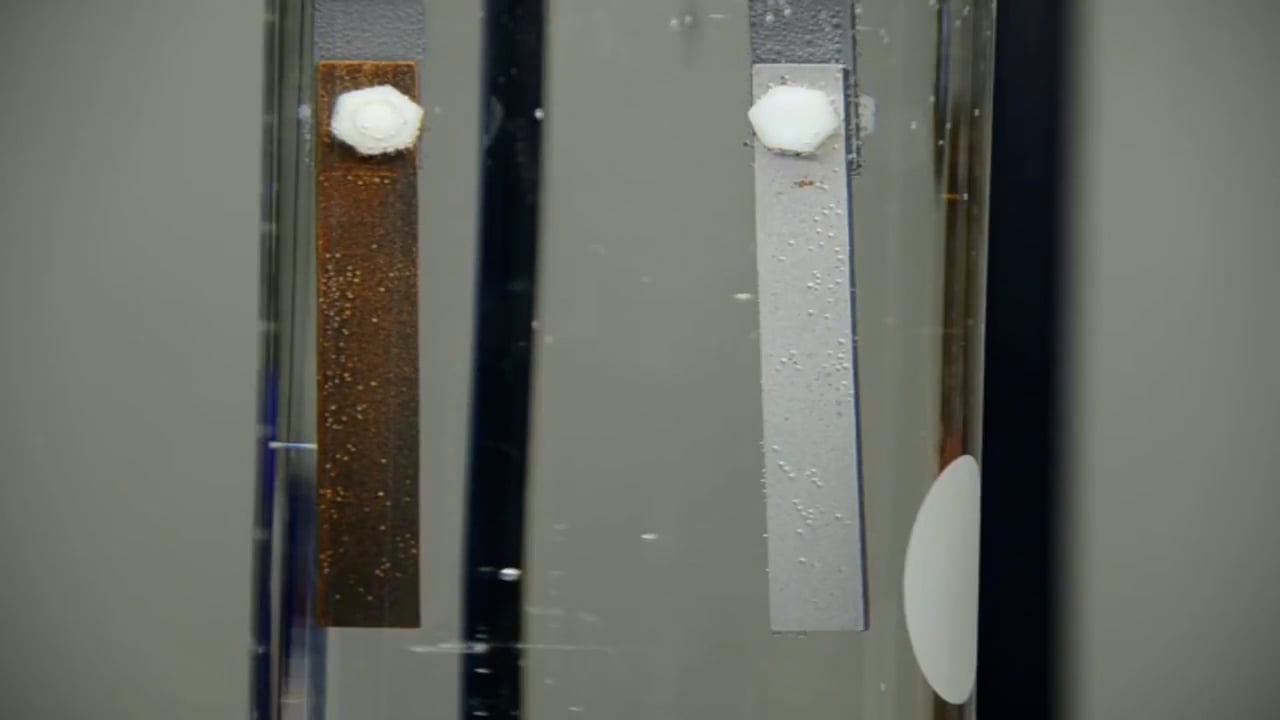
2) Excellent protection against corrosion.
3) Economical savings in terms of lower product consumption.
4) Full technical support for the treatment concept implementation.
5) Implementation of a non-toxic treatment program free of cyclohexylamine CPCU is entirely satisfied with Kurita’s Cetamine Technology and recommends its usage for boiler networks.
1) Ideal distribution of active components in the whole network resulting in optimal alkalization.
2) Excellent protection against corrosion.
3) Economical savings in terms of lower product consumption.
4) Full technical support for the treatment concept implementation.
5) Implementation of a non-toxic treatment program free of cyclohexylamine CPCU is entirely satisfied with Kurita’s Cetamine Technology and recommends its usage for boiler networks.
SABIC, one of the world's largest petrochemical manufacturers with operations in over 50 countries, applied Kurita's Cetamine® Technology in the high-pressure transfer line exchanger system since 2009. After shifting to Cetamine® Technology these benefits have been achieved:
1) Important water & energy savings have been realized due to blow-down reduction
2) Steam quality has greatly improved
3) Inspections have shown TLEs and drums effectively protected against corrosion by a thin, uniform, adherent magnetite layer
4)Turbines are exceptionally clean and free of corrosion
5) KURITA provides a reliable Cetamine® Analytical Method to monitor the Cetamine® residual
1) Important water & energy savings have been realized due to blow-down reduction
2) Steam quality has greatly improved
3) Inspections have shown TLEs and drums effectively protected against corrosion by a thin, uniform, adherent magnetite layer
4)Turbines are exceptionally clean and free of corrosion
5) KURITA provides a reliable Cetamine® Analytical Method to monitor the Cetamine® residual
We would like to express our sincere appreciation to your team for successful and smooth transition during changeover of vendor to Kurita Aquachemie for the Utility and cooling water systems treatment contract in 2020. We found the same level of commitment during successful transition of Boiler water treatment from traditional to Kurita Cetamine® Technology in 2021. We wish more success to Kurita in Future.
Cetamine has been used in our boiler for 4 years. Benefits observed during this period in our company:
1) Prevented gasket leaks,:
2) Our bluff amount decreased,:
3) Make up amount decreased 15%,:
4) Boiler limit values kept at standard values,:
5) The reduction of corrosion-related problems in steam lines,:
6) A 15% decrease in iron values in the boiler compared to the previous year. We would like to thank this product produced by Kurita company for the contributions it has made and will make to our company.
1) Prevented gasket leaks,:
2) Our bluff amount decreased,:
3) Make up amount decreased 15%,:
4) Boiler limit values kept at standard values,:
5) The reduction of corrosion-related problems in steam lines,:
6) A 15% decrease in iron values in the boiler compared to the previous year. We would like to thank this product produced by Kurita company for the contributions it has made and will make to our company.

Kurita carries out the chemical and analytical water supply program for Reverse Osmosis and steam generator for turbine system successfully. Using Cetamine® technology in the Foster Wheeler boiler that generates high-pressure steam for the turbine, has improved the efficiency of energy sources, improving production capacity and has simplified the work of analytical control.
Kurita Ibérica supplied us chemical specialties as well as technical service and consultancy in the field of water treatment, giving us water and energy savings due to the use of Cetamine in the boiler water treatment.
After more than three years of experience with dosing the Cetamine products, we can confirm the following improvements compared to the previous situation:
1) Reduction of the continuous blow-down water by up to 50%
2) Reduction of the contents of iron in the boiler water by up to 85%
3) Significant feed water quality improvement
4) Optimization of pH control in the complete steam-water pipeline system.
1) Reduction of the continuous blow-down water by up to 50%
2) Reduction of the contents of iron in the boiler water by up to 85%
3) Significant feed water quality improvement
4) Optimization of pH control in the complete steam-water pipeline system.
The program of boiler treatment based on its product Cetamine has allowed a correct development of the treatment and its satisfactory results.
We ADC GmbH wish to express our satisfaction about Kurita Europe performances matching exactly our expectations due to the advanced formulation provided, Cetamine. The quality service is highly appreciated as it is timely, professional, and specialized.

Thanks to the advanced formulations provided, the traditional water treatment concept has been changed to water treatment based on CETAMINE Technology. We would like to emphasize our satisfaction in meeting our expectations for stable corrosion prevention and water saving performance throughout the year in our steam boilers with an operating pressure of 12 bar and steam capacity of 8 tons/hour with Cetamine Technology.
Kurita Turkey has been supplier for 6 years for water chemical treatment application (steam boiler). Particularly we would like to stress we monitored scale and corrosion system performance due to Cetamine application.
After our long-time cooperation with Kurita we can confidently recommend CETAMINE TECHNOLOGY as a reliable and effective chemical treatment program for boiler applications.
Uniper UK Limited has applied Kurita’s Cetamine Technology since 2013 for power plant water-steam cycle treatment at our Connah’s Quay power station. Based on plant monitoring, system inspections and operating experiences we can confirm:
1) Heat Recovery Steam Generators and steam turbine internal surfaces are clean and free of corrosion.
2) Cetamine Technology has enabled the protection of components throughout the water steam cycle, including areas that could not be preserved by conventional preservation methods.
3) Reduced manpower is required for boiler and turbine preservation compared to our previous practice.
4) A reliable photometric method was provided by Kurita to monitor the residual concentration of Cetamine in water and steam samples.
1) Heat Recovery Steam Generators and steam turbine internal surfaces are clean and free of corrosion.
2) Cetamine Technology has enabled the protection of components throughout the water steam cycle, including areas that could not be preserved by conventional preservation methods.
3) Reduced manpower is required for boiler and turbine preservation compared to our previous practice.
4) A reliable photometric method was provided by Kurita to monitor the residual concentration of Cetamine in water and steam samples.

After our long-time cooperation with Kurita, we can confidently recommend Cetamine Technology as a reliable and effective chemical treatment programme for boiler application.
ACICO, a leading producer of sustainable building materials with licensed plants all over the world, applies Kurita’s Cetamine Technology in their boilers and closed systems. After shifting from traditional treatment to Cetamine® Technology these benefits have been achieved:
1) Reduction in steam drum water conductivity.
2) Reduction in boiler blowdown.
3) Reduction in iron levels in boiler blowdown and closed cooling system.
4) Reduction in man power requirement.
5) Reduction in chemical inventory.
6) Reduction in overall treatment cost.
1) Reduction in steam drum water conductivity.
2) Reduction in boiler blowdown.
3) Reduction in iron levels in boiler blowdown and closed cooling system.
4) Reduction in man power requirement.
5) Reduction in chemical inventory.
6) Reduction in overall treatment cost.

Our sincere appreciation on the successful smooth changeover of Phosphate Treatment to Cetamine Treatment program in IDC Plant Boilers System since December 2020. The changeover was done smoothly without affecting our plant operation and maintaining the Cetamine Treatment Control Limits.
ZOETIS INC. an American pharmaceutical company and the largest producer of medicine and vaccinations for pets and livestock successfully applies Kurita's Cetamine® Technology for boiler water treatment at one of its European production sites in Belgium.
Benefits provided:
1) Only 1 product instead of 3 to treat the boilers and steam and condensate system,
2) Clean system surfaces with better heat transfer & boiler efficiency,
3) AII volatile treatment concept leading to significant lower blow-down,
4) Savings in water & energy,
5) Reduction of total iron leading to better protection of the boilers especially during shut-down periods,
Benefits provided:
1) Only 1 product instead of 3 to treat the boilers and steam and condensate system,
2) Clean system surfaces with better heat transfer & boiler efficiency,
3) AII volatile treatment concept leading to significant lower blow-down,
4) Savings in water & energy,
5) Reduction of total iron leading to better protection of the boilers especially during shut-down periods,