
Kurita’s PFAS Water Treatment Approach
From analysis to optimized solutions.
Adapted to your water chemistry and regulations.
PFAS: persistent “forever chemicals” creating long term water challenges
Per‑ and polyfluoroalkyl substances (PFAS) are a large group of synthetic chemicals valued for their water, oil and heat resistance. Due to their extremely strong carbon–fluorine bonds, PFAS are highly persistent in the environment and are often referred to as “forever chemicals.”
Today, PFAS are detected across many water streams including drinking water, wastewater, groundwater, surface and storm water, and landfill leachate impacting both industrial and municipal systems.
PFAS challenges across the full water cycle
- Drinking water
- Wastewater
- Groundwater
- Surface & storm wate
- Landfill leachate
- Sediment capping
Why PFAS are difficult to manage?
They do not break down naturally, remaining in water and the environment long term.
Thousands of PFAS compounds exist, with different behaviours depending on chain length and chemistry.
Regulatory limits are tightening, requiring treatment at very low concentrations.
Treatment performance depends on the whole system, including background water chemistry and co contaminants.
Kurita's 360º PFAS Water Treatment Solution
A Comprehensive, Holistic Approach to PFAS Remediation
Understanding PFAS is the first step. Designing the right treatment strategy is where Kurita adds value.
PFAS Analysis
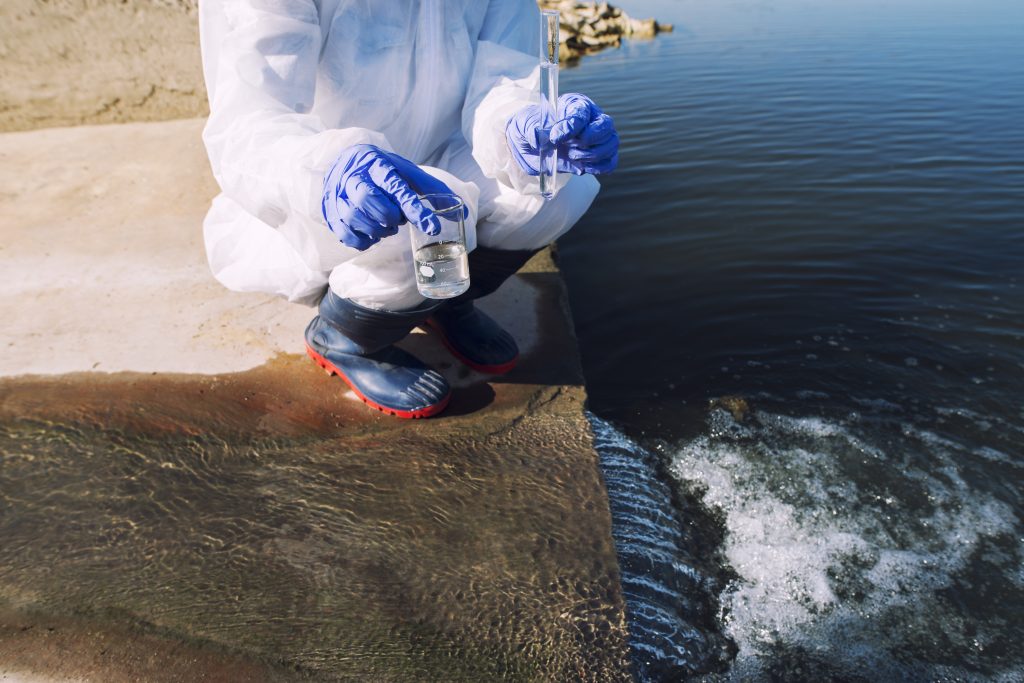
We conduct a complete PFAS analysis and mapping across multiple matrices using established analytical methods to accurately quantify a wide range of PFAS compounds in contaminated samples.
Audit: Full System Mapping
We investigate your system and potential contaminated sources, with Kurita experts doing sampling on site, data collection, and frequent technical exchanges so recommendations match your existing equipment, constraints, and goals.
Lab and Pilot Trials
We tailor bench tests to select the best PFAS removal method for each site's water chemistry. Using lab data, we conduct on-site pilot trials to confirm and refine treatments. Our approach includes in situ testing and careful evaluation to ensure optimal results.
Kurita's tailored PFAS treatment approach, built around your water system
Successful PFAS management starts with understanding what PFAS are present, where they come from, and how the entire water system behaves before selecting or combining treatment technologies.
Kurita’s PFAS Treatment Technologies
There’s no single solution for PFAS removal, it requires a customized approach.
The most effective solution depends on PFAS type, concentration, background water chemistry and treatment objectives. Kurita applies a flexible, multi‑technology treatment approach, using individual or combined processes to deliver reliable, compliant results.Kuriflock™ 6950 is a bio‑based, liquid flocculation agent designed for high PFAS concentrations (> 0.3 ppb) and challenging water matrices. It works by forming micro‑flocs that entrap PFAS through charge interactions.
Key benefits:
- Effective for waters with high TOC (Total Organic Carbon) and COD (Chemical Oxygen Demand)
- Low sensitivity to co‑contaminants
- Compatible with existing flocculation and precipitation systems
- Biodegradable, non‑toxic and energy‑efficient
- Cost‑effective solution with low operational complexity
Kuriflock™ 6360 is a surface‑modified mineral designed specifically for PFAS adsorption, offering higher selectivity and faster kinetics than conventional activated carbon.
Key advantages:
- High active surface area and fast adsorption rates
- Suitable for both short‑ and long‑chain PFAS
- Reduced impact from co‑contaminants such as TOC
- Shorter empty bed contact times (EBCT 2–20 min)
- Up to 4x higher loading rate compared to GAC
- Minimal residual waste and lower overall lifecycle cost
- NSF/ANSI/CAN 61 certified
PFAS molecules bind directly to sorption sites within the Kuriflock™ 6360 matrix, providing efficient capture and delayed breakthrough compared to activated carbon systems.
Reverse Osmosis (RO) and Nanofiltration (NF) are pressure-driven membrane processes that effectively remove PFAS from water through size exclusion and electrostatic repulsion. RO provides very high rejection of both short- and long-chain PFAS, typically exceeding 95%, but operates at higher pressure and energy demand. NF offers lower energy consumption and is particularly effective for longer-chain PFAS, making it suitable for applications where partial desalination is acceptable.
Ion exchange is a highly effective treatment technology for PFAS removal, using specialized anion exchange resins with strong affinity for PFAS compounds. It is especially efficient for medium and long-chain PFAS and can achieve low effluent concentrations. Ion exchange typically has lower energy requirements, but performance strongly depends on water quality and requires periodic replacement.
Why Kurita?
Typical Market Approach
The Kurita Approach
Proof & Partnerships
Kurita’s PFAS treatment approach is strengthened by real‑world project experience and targeted partnerships that expand our capabilities in treatment performance, sustainability and monitoring innovation.
Municipal PFAS experience
Tonka Water
Through Tonka Water (Kurita Brand), Kurita supports municipal PFAS projects from feasibility and treatability assessment through system design and commissioning. This includes Rapid Small‑Scale Column Testing (RSSCT) and pilot studies to compare adsorption technologies, evaluate performance and assess lifecycle costs under real water conditions.
Learn MoreSustainable PFAS removal
CycloPure
Kurita has expanded its collaboration with CycloPure to integrate DEXSORB®, a regenerable PFAS‑specific adsorbent designed for high capacity and reduced waste through regeneration and concentration workflows. This partnership supports more sustainable PFAS treatment strategies with a focus on long‑term performance and lifecycle impact.
Learn MoreOn site PFAS monitoring
FREDsense
Kurita is collaborating with FREDsense to deploy and scale adoption of the FRED‑PFAS™ field analysis kit, enabling rapid on‑site PFAS screening for improved monitoring and operational decision‑making. The collaboration is supported by a jointly published white paper and ongoing proof‑of‑concept evaluations.
Learn MoreKurita Reference Cases for PFAS Treatment
Ensuring PFAS‑Safe Drinking Water in a European Food & Beverage Plant
PFAS Treatment in a Chemical Plant
PFAS Expert Q&A
PFAS (Per‑ and Polyfluoroalkyl Substances) are a large group of man‑made chemicals often referred to as “forever chemicals” because they do not break down naturally in the environment.
PFAS are a growing concern because:
- They are widely detected in European water bodies, including rivers, lakes, and coastal waters.
- They accumulate in the human body over time.
- Scientific studies link PFAS exposure to immune system disruption, developmental effects, hormonal imbalance, and increased cancer risk.
- They are highly mobile in water and soil and cannot be effectively removed using conventional water treatment methods.
Any facility that manages or discharges water may be exposed to PFAS compliance risks, including:
- Industrial sites (process water, cooling water, wastewater)
- Municipal wastewater and drinking water systems
- Stormwater and surface water management
- Landfill leachate and contaminated groundwater
PFAS are not limited to a single sector—any water stream can be impacted, regardless of industry.
PFAS regulation is tightening across Europe due to:
- Expanding scientific evidence on toxicity and bioaccumulation
- Increasing public awareness and regulatory pressure
- New EU requirements for mandatory monitoring, reporting, and lower limit values
Regulations now cover more PFAS compounds at lower concentration limits, making compliance more complex and urgent for industrial and municipal operators.
Yes. Under new and upcoming regulations (such as the EU Urban Wastewater Treatment Directive and national laws), PFAS discharges will no longer be tolerated, even if the water is not intended for drinking.
Countries such as France have already introduced financial penalties and strict discharge limits, making proactive PFAS treatment essential to avoid regulatory, financial, and reputational risk.
At a minimum, EU regulations require monitoring of:
- PFAS‑20: Sum of 20 PFAS ≤ 100 ng/L
- PFAS‑4: PFOS, PFOA, PFHxS, PFNA (priority substances due to higher toxicity)
Kurita can analyse 31+ PFAS compounds, including:
- Regulated PFAS
- Emerging PFAS substitutes
- Site‑specific or industry‑specific compounds
There is no single “best” PFAS treatment technology.
PFAS removal depends on:
- PFAS chain length and speciation
- Water matrix complexity (organics, salinity, co‑contaminants)
- Target discharge or drinking water limits
- Existing system configuration and operational constraints
- Current and future regulatory requirements
Effective PFAS management requires a system‑based approach, not a one‑product solution.
Kurita delivers a full‑cycle PFAS strategy, not a product‑only solution. The approach is structured as:
PFAS Mapping & Audit → Lab & Pilot Trials → System Design → Long‑term Performance Delivery
This methodology focuses on:
- Accurate PFAS detection and source identification
- Technology selection based on real water chemistry
- Compliance with current and future regulations
- Sustainable, long‑term operational performance